End-to-end user journey UI: Travel Shops Creator Flow – Expedia Group
Situation
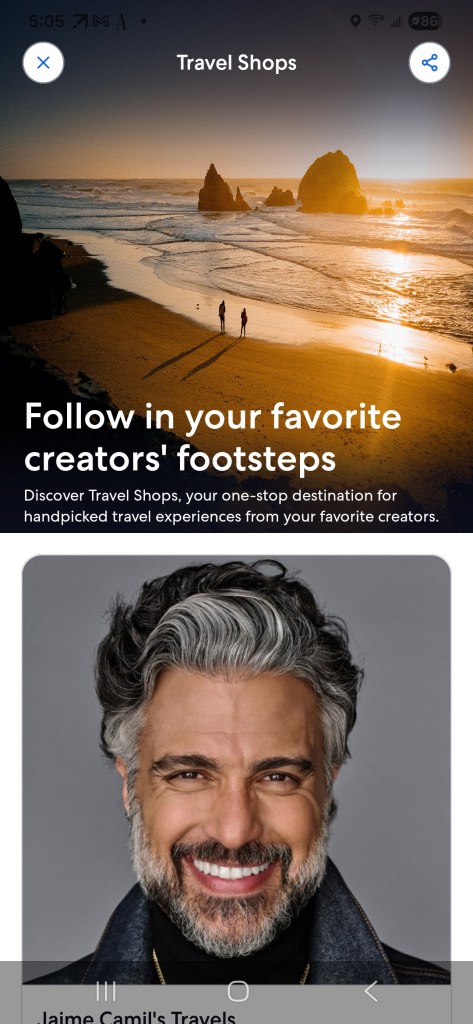
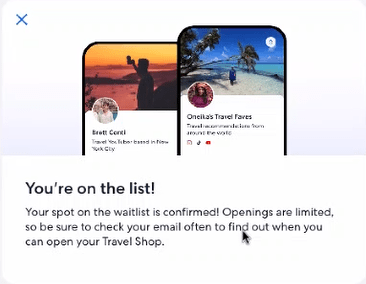
- In early 2025, Expedia launched a social media affiliate program where “Creators” (influencers) could build and launch their own Travel Shop on the site.
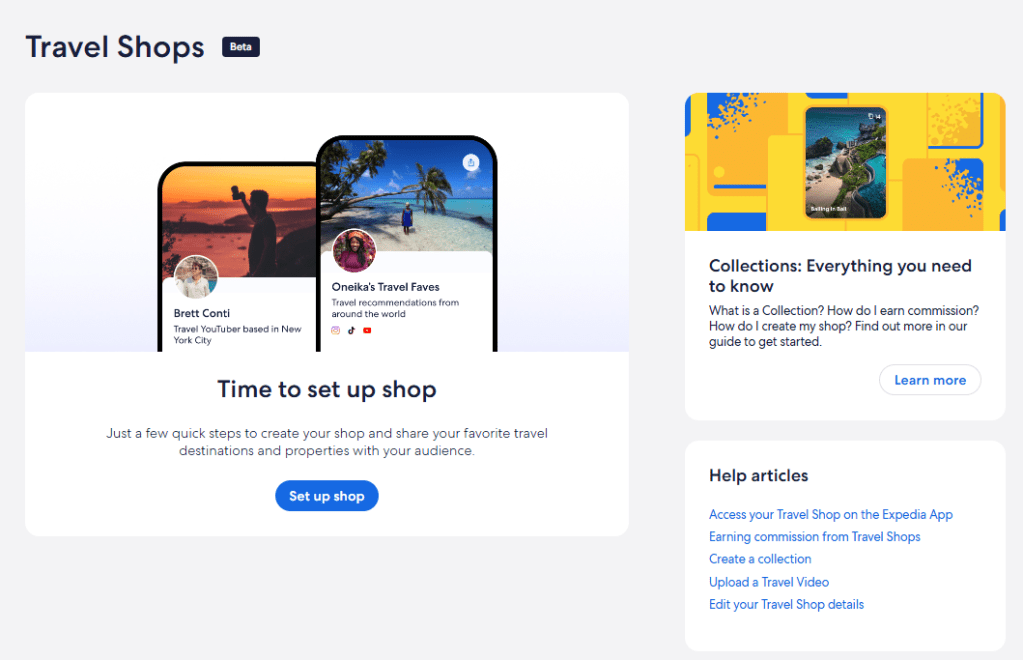
- Influencers created profiles and built an app-based shop with their themed recommendations for different lodging properties. When they featured a special affiliate link on their own social media sites, influencers could earn commissions on any bookings made through Expedia.
- The beta program was launched with 250 hand-picked influencers building shops, with a waiting list of ~2500.
Issue
- Unfortunately Travel Shop creation underperformed, with a negative ROI and to save the initiative, Expedia decided to conduct user research to figure out why uptake was so slow.
- The data from two exhaustive studies identified three major issues:
- The process to create a Travel Shop was confusing and required switching between using the Expedia app and the website in the middle of the process. Many creators gave up halfway through the process.
- Instructions on how to create a shop were unclear, using technical jargon and missing vital steps in the procedure. There were inexplicable redundancies on how to create different elements, with duplicated entry points to carry out the same tasks.
- Because shops were created but not populated with curated property content, Creators received little to no affiliate income, which led to discouragement and abandonment of their Travel Shop.
- Expedia made the decision to invest in XD resources to redesign and rewrite the content in the Travel Shop tooling. I and a visual XD Designer were brought onboard to do the work.
Goals for the project
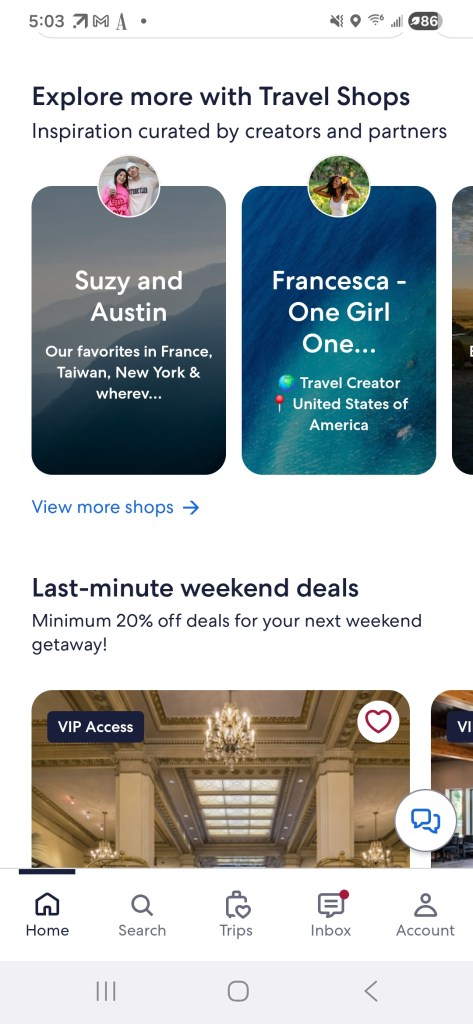
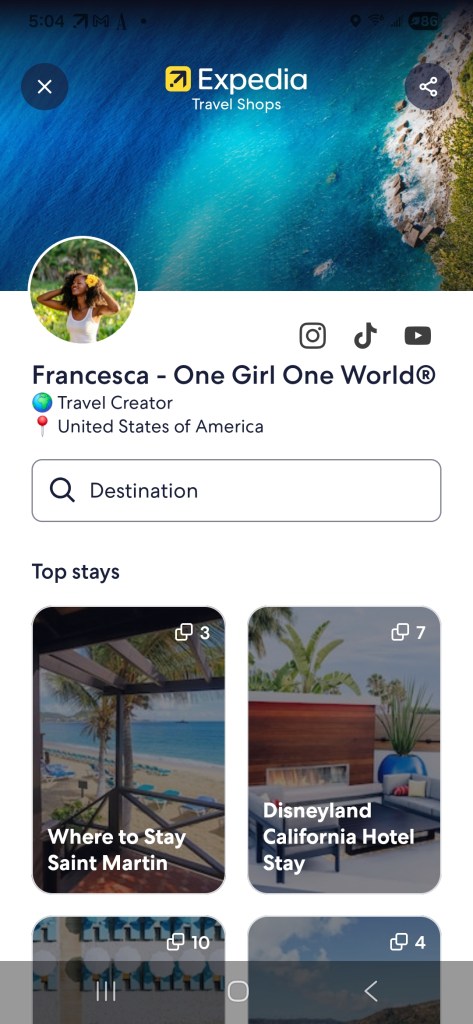
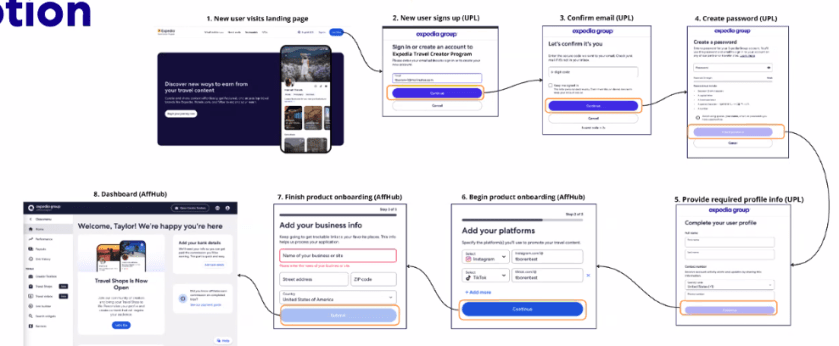
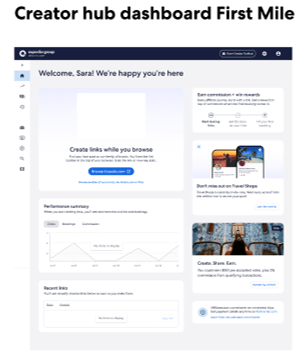
- Build cohesive new end-to-end creator flows for both video uploads and property content that just worked.
- Rewrite all UI content so that creators clearly understood setup procedures and provide links to user assistance throughout.
- Ensure that these flows did not require switching from app to web to back to app, but that each touchpoint could be used to create a Travel Shop.
- Increase content population of each shop and thereby increase affiliate traffic and commissions.
- Increase the Gross Booking Value (GBV) for each shop and encourage new Creators to invest time and energy in building their shop
Work process and actions
Research, audits and analysis:
- Analyzed conclusions from the user studies and identified pain points and dissatisfactions from the beta Creators
- Carried out a competitive audit of other influencer affiliate programs to discover common content interaction patterns
- Created my own Travel Shop and worked through the process to realize why Creators were so frustrated
- Wireframe creation, content mapping and information display:
- Defined the Jobs to be done (JTBD) and created a consistent content hierarchy for each screen
- Rewrote all product copy and created a consistent navigation bar
- Created new step-by-step procedures for each screen, making sure that the language was consistent and user friendly (no more technical jargon!)
- Deleted redundant language and with the designer, advised that multiple entry points to carry out tasks were eliminated.
Outcomes
- Two end-to-end user flows (Video Tooling and Property Collections) were created on time and to specifications, before Travel Shop creation was opened to the waitlist.
- Existing Creators expressed increased satisfaction with the new processes and there was a dramatic increase in content creation for the original Travel Shops.
- There was exponential growth of Travel Shops creations when the beta was opened to the waitlist. Travel Shops created went from 250 to 1800 within 2 months after the revised flows were launched.
- Travel Shops are now firmly established as an Expedia product, which is featured on the landing pages of both the web and the app touchpoints.
- Metrics: GBV grew by 9%, and 44% MoM. $3.6M (72%) of annual IGP goal was achieved.
User Assistance Project: Airline Onboard POS Mobile App – Avanade, Inc
Situation
A major US Airline chose Avanade to design, build, and deliver a Point-of-Sale (POS) Windows Phone application for Flight Attendants (FAs). This tool was used to help FAs carry out a number of functions: sell and deliver passenger food and drink orders; sell duty-free products; record any passenger incidents or feedback; send service requests to the airlines maintenance and repair staff.
Issues and Goals
Unfortunately, early user testing revealed that a beta group of FAs were unable to understand what to do when presented with the app. The UI language was confusing, steps appeared to be missing in the process to enter food and drink orders and instructions on how to start and end sessions weren’t there.
Product managers and developers decided to bring in a content designer to fix these issues, with the following goals:
- Go through the user flow content and determine which steps of the interactions weren’t present and then create step-by-step instructions on how to carry out each task in an FA’s to-do list for each transaction.
- Analyze and redefine the content hierarchy to present the most important information using content design techniques (headers, chunking, minimal text and microcopy.
- Create quick reference materials for FAs to use in flight.
Work process and actions
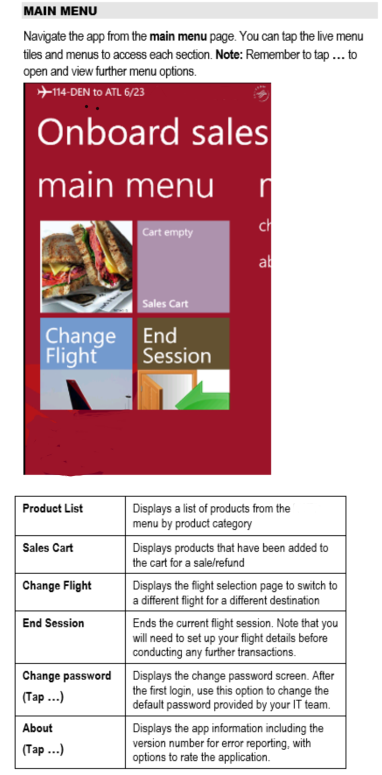
I was assigned to the project as a UX writer and user assistance writer and editor. After reviewing and refining user requirements through virtual meetings with stakeholders, I received a mobile prototype and conducted tests following the existing documentation, which I redesigned and rewrote.
Through trial and error testing on the prototype, I created short contextual onscreen help, as well as created and wrote an icon-based Quick Reference Card for FAs to use in situ.
Finally, I designed and then wrote an extended version of all user assistance published to a soft-copy pdf for in-depth browsing.
Outcomes
The clarity of the user assistance was specifically called out in helping FAs quickly onboard use of the application with minimal user error. The follow-on benefits of deploying the app included improved in-flight experience for customers, increased transactions per flight and less revenue loss, and improved in-flight effectiveness/productivity of FAs.
 Paula Croxon