Microcopy: Vrbo Loved by Guests
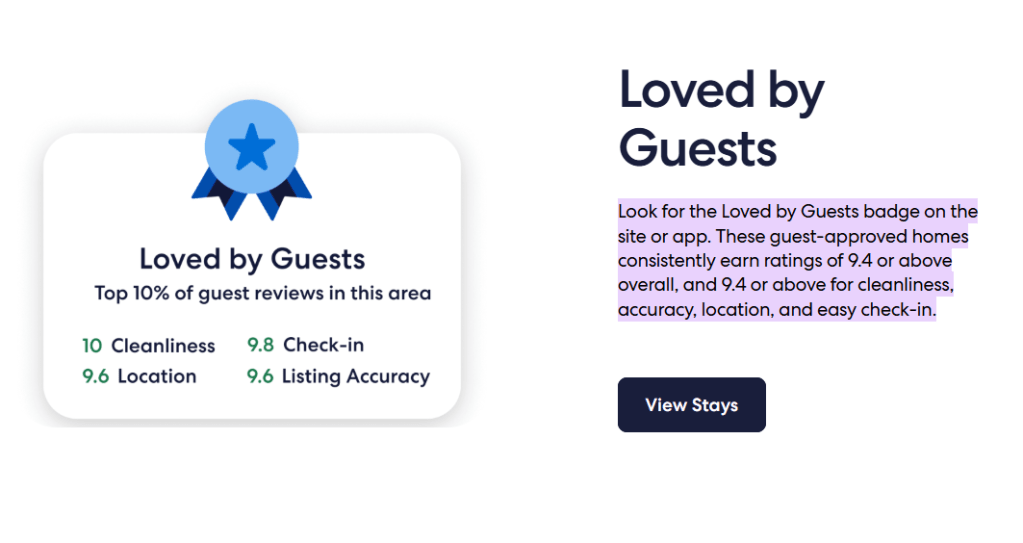

- In late 2025 Airbnb, Vrbo’s direct competitor, featured a “Guest Favorite” badge to highlight the best ABB properties based on “ratings, reviews and reliability” throughout the shopping experience. Vrbo competitive analysis determined that this significantly increased Airbnb’s bookings of these properties and increased their overall conversion rate.
- Vrbo did not have a comparable sales strategy, so my design team was tasked with creating an equivalent initiative without copying Airbnb’s example. As it was content-driven, I took the lead in working with our data analysts to create a sorting algorithm that would display every property with a rating above 3.5.
- Using the many data points such as review and rating counts, reliability signals, review superatives, etc., we were able to surface the top 10% of properties that were most popular and offered a good reliable experience.
- I was tasked with creating and naming the concept, and in charge of messaging the content for property badging. The samples above shows the range of microcopy created.
- Loved by Guests showed a significant increase in conversion during testing (+6.7%) and the concept was rolled out. It now has become a feature focus when describing Vrbo’s quality measures of providing a great vacation rental experience.
Microcopy: Expedia Group Proximity to Beach
- Most beach vacations are booked from January to mid-March and in 2025 that pattern remained consistent for Expedia Group booking.
- What was different that year was the level of complaints from beach vacation travelers that reached an uncomfortable level and leadership tasked the property search team to discover what the issues were and create a solution to address them.
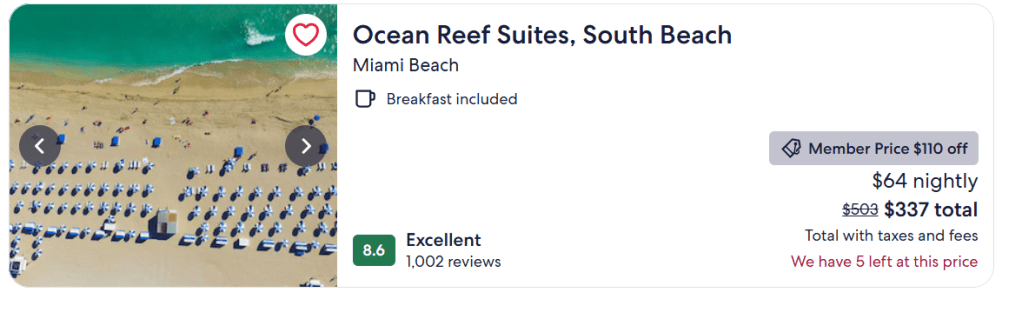
- User research uncovered the problem: there was no clear way to indicate how close a property was to a beach, in a way that was meaningful to travelers seeking a beach vacation. The sample above shows the issue. The property shows that it is in Miami Beach, but Miami Beach has over 3000 places to stay listed on Expedia.
- What travelers really wanted to know before booking is how far they were from a beach. I carried out research that showed proximity and walkability were the two most critical factors. People were not inclined to explore anything that was over 15 minutes walking from the beach. And even 5 minutes walk to the closest beach didn’t necessarily mean that it was “on the beach”.
- The solution: I created a classification based on proximity and walkability, and my team applied it throughout the property search results page.
- I created search filters for beach access “On the beach” or “Near the Beach.”
- Each individual property displayed microcopy indicating if it was on the beach or how many minutes walk it was to the beach. If it was over 15 minutes walk to the closest beach, then the distance in miles was shown.
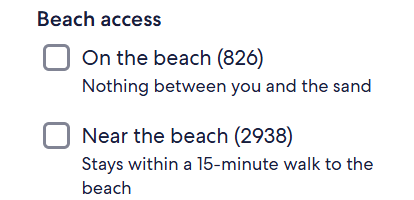
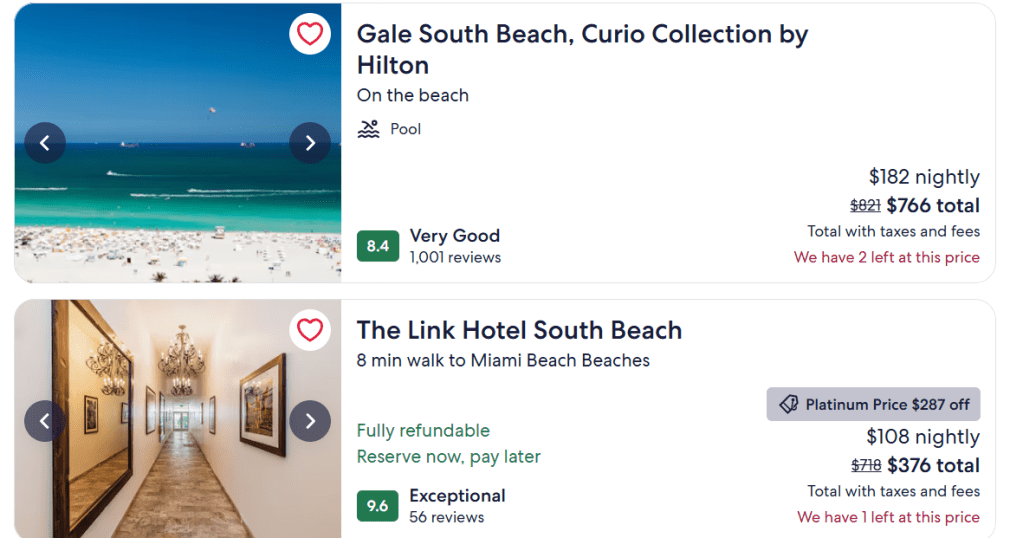
- There was some pushback from the properties when Expedia Group implemented this structure, but Expedia Group made it a requirement for all three brands (Expedia, Vrbo, Hotels.com) that any properties listing beach access followed these requirements when listing on our sites.
- Although there wasn’t a stasticially significant increase in conversion, traveler engagement with the Beach access filters were strong and complaints on this particular issue almost disappeared.
Shortform UI Content: Vrbo Long Stays
- In 2024 Vrbo (part of Expedia Group) started a new initiative focusing on renting properties for long stays of 28 days or more.
- As the Content Designer on the project, I wrote end-to-end UI flows for both the search results page (SRP), as well as for the individual property page (PDP).
- I worked with a User Researcher to identify the 5 persona types of Long Stay travelers and then carried out an extensive competitive audit of the marketplace.
- I then analyzed internal data to determine the best amenities and geographic locations for long stays and mapped it to seasonal booking patterns. Results of this analysis showed that the average booking window for long stays was 3-6 months prior to the rental, which was significantly longer than the average short stay booking window of 6 weeks.
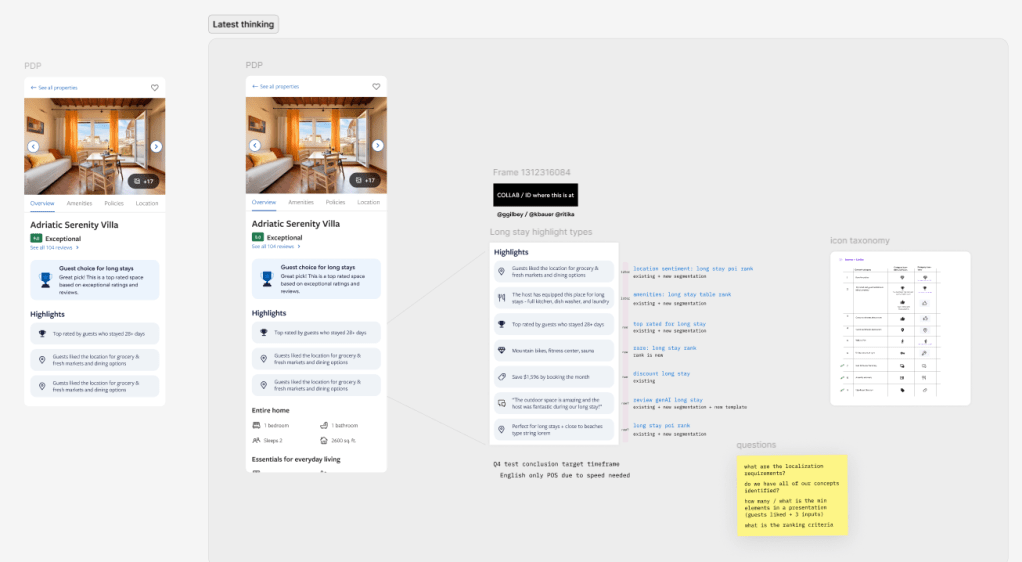
- Based on this analysis, I worked with the visual designer to create a series of content modules highlighting the items that long stay bookers looked for when evaluating a property.
- I then worked with engineers on writing search business rules in order to bring up the right infomation at the right time, and ranked in order of importance.
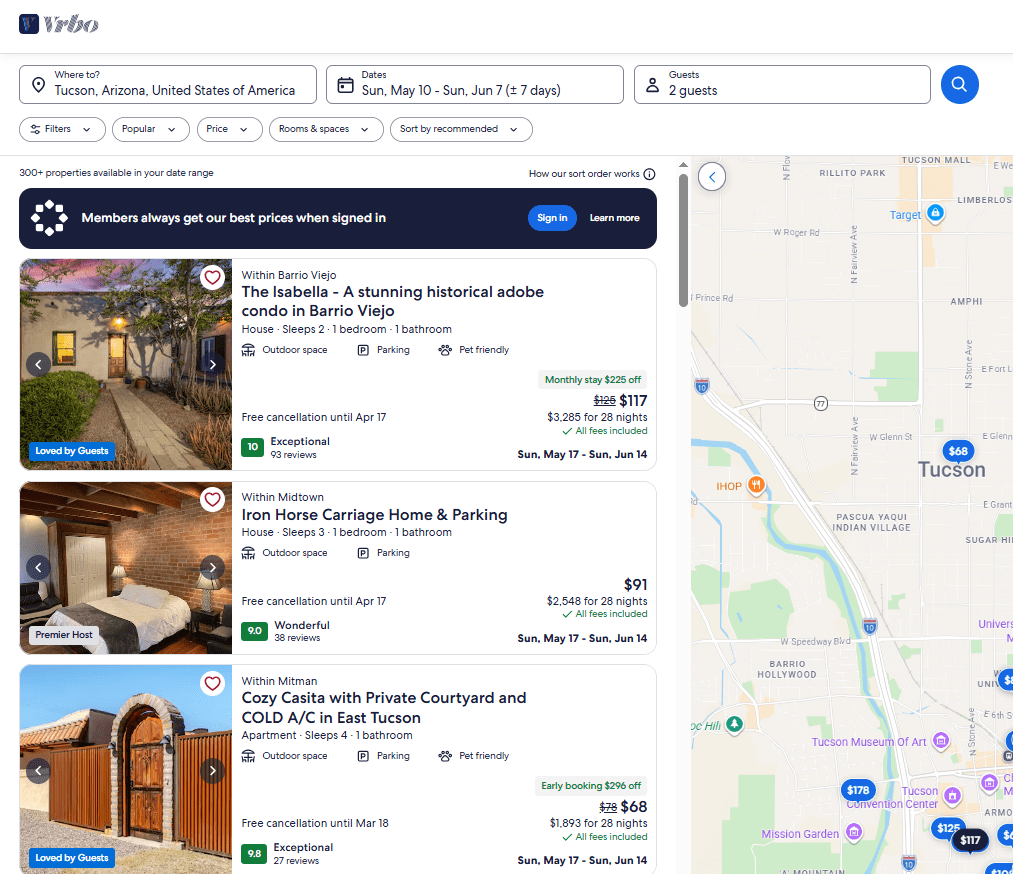
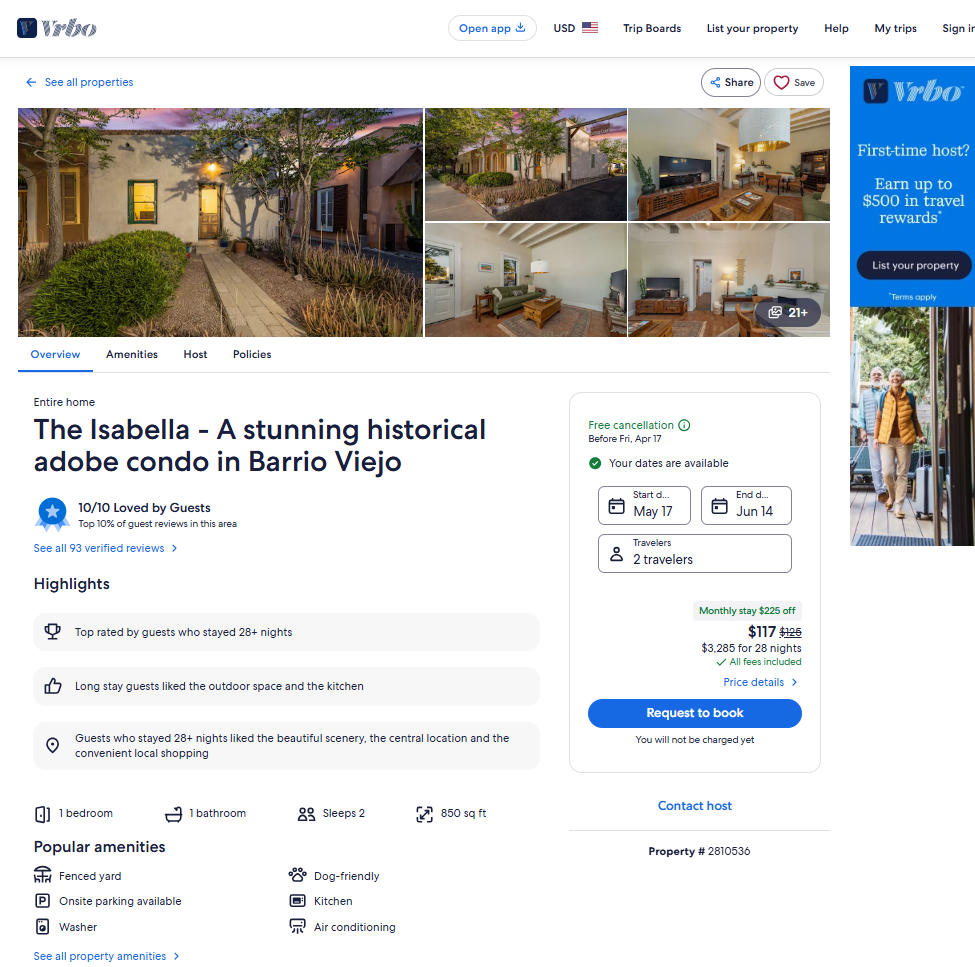
The result was creating a matching set of SRP/PDP property cards that would display optimized results when travelers looked for stays of over 28 days, with a significant increase in conversion and a significant uptick in booking of long stays on Vrbo.com.

